
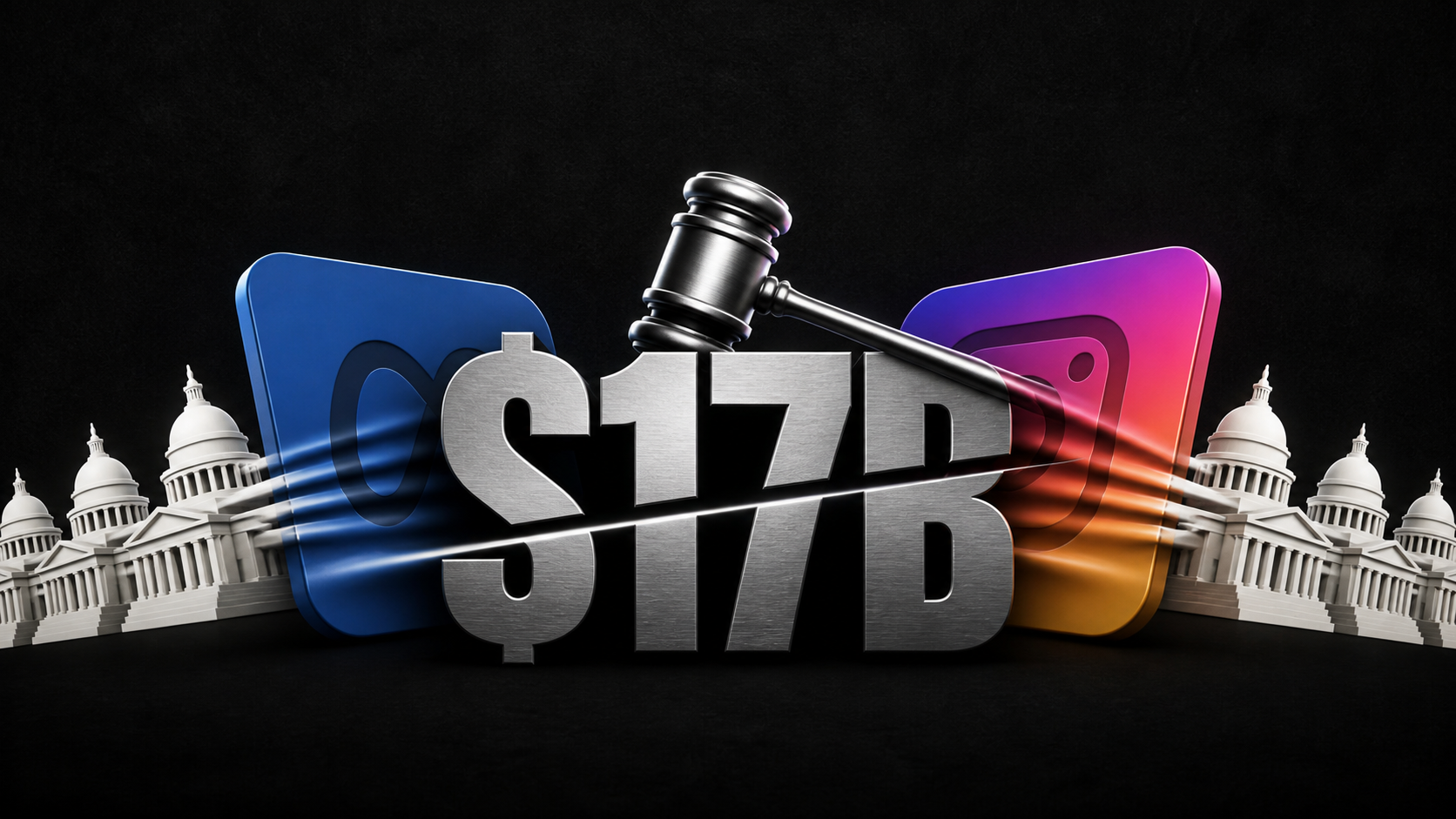
Meta Agrees to Sweeping $17 Billion Settlement as States Force Major Changes to Instagram and Facebook

Read Time:6 Minute, 23 Second
A parent stands in a dimly lit kitchen just after midnight. The house is quiet, but a faint glow spills from beneath a teenager’s bedroom door. Inside, a screen scrolls endlessly. Notifications arrive one after another. Likes appear. Videos begin before the last one ends. Hours pass almost unnoticed. For many families, that scene has become a familiar part of modern life. Parents worry about sleep, attention, self esteem, and the influence social media can have on young people. On Wednesday, those concerns moved from kitchen table conversations into one of the largest settlements ever reached involving a technology company.
California Attorney General Rob Bonta and a bipartisan coalition of 51 Attorney Generals announced a proposed settlement with Meta Platforms, the parent company of Facebook and Instagram. If approved by the court, the agreement would require major changes to how the company’s platforms operate for children and teenagers while providing up to $17 billion in payments to states over the next decade. California alone could receive between $1.5 billion and $2.1 billion.
The settlement stems from litigation alleging that Meta designed and deployed features on Instagram and Facebook that encouraged compulsive use among young users while misleading families and the public about the risks associated with those products. The lawsuit also alleged unlawful collection and use of data from children under 13 and violations of federal and state consumer protection laws.
Tim Roehrs, a partner at The Carlson Law Firm who has been involved in social media addiction litigation, said the settlement should be understood against the broader backdrop of complex claims involving both personal injuries and state enforcement actions. He noted that while the agreement concerns claims brought by Attorney Generals over alleged violations of child-protection and consumer-protection laws, it also resonates with families who say children were harmed after using Meta’s platforms.
“This settlement is very meaningful,” Roehrs said. “As in most settlements, they are not admitting that they violated anything, but I would say that money does the talking. This is the beginning of them recognizing the harm that these platforms are having on children.”
According to Bonta, the agreement is intended to produce immediate and measurable changes.
“Today, we have secured a settlement with Meta that will make social media less dangerous for our kids and make a world of a difference for children and their families,”
Bonta said. He added that Meta has agreed to major platform changes designed to reduce the risk of harm to young users.
What makes the proposed settlement notable is not just its size, but the scope of the behavioral changes it would require.
Under the agreement, users under 18 would face a default daily time limit of two hours on Meta’s platforms unless a parent chooses to lift the restriction. A default overnight block would prevent access between midnight and 6 a.m., again with parental authorization required to remove the limitation. The company would also block notifications to minors during overnight hours and throughout much of the school day.
For parents who have watched teenagers wake up to alerts, messages, and social pressure before the school day even begins, those provisions are aimed directly at concerns that have fueled years of debate over technology and youth mental health.
The settlement also targets features that critics have argued contribute to unhealthy online experiences. Meta would be prohibited from displaying public like and reaction counts to users under 18. Cosmetic procedure image filters would be banned for minors. Young users would also have the option of choosing a non personalized feed rather than an algorithmically driven stream designed to maximize engagement.
Meta would be required to strengthen age assurance measures intended to identify users under 18 and remove children under 13 from the platform. Enhanced parental supervision tools would be implemented, and an independent auditor would be given broad authority to monitor compliance and report concerns to state Attorney Generals. The company would also be prohibited from making false, misleading, or deceptive statements regarding its safety features.
For Roehrs, the proposed operational changes are central to the settlement’s importance because they go beyond monetary payments and address how minors experience the platforms. He said the size of the settlement, combined with changes to the way Instagram and Facebook function for younger users, represents movement toward protecting children from what he described as a harmful product.
Those requirements reflect allegations that formed the foundation of the states’ case. Filed in 2023, the lawsuit accused Meta of making design decisions that promoted excessive use among young people while publicly minimizing the risks associated with Facebook and Instagram. State officials argued that these practices contributed to harms affecting children and teenagers across the country.
“Ultimately, what it means is that Meta is being held accountable for decisions that were made behind closed doors—decisions that have harmed children,” Roehrs said. “The fact that they are now being held accountable is a very, very good thing.”
The coalition behind the settlement stretches across political and geographic lines. Attorney Generals from states and territories throughout the nation joined the agreement, giving it a bipartisan character that is increasingly rare in high profile technology litigation.
Whether viewed as a consumer protection victory, a youth mental health initiative, or a warning to the broader technology industry, the proposed settlement represents one of the most significant government efforts yet to reshape how social media platforms interact with young users. Still, the agreement remains subject to court approval through a consent judgment.
The announcement also carries significance for firms representing families in related litigation. Roehrs said The Carlson Law Firm has seen the toll alleged social media harms have taken on young people and their parents, including families who lost children to suicide. While he emphasized that no settlement can undo that loss, he said accountability can provide some measure of justice.
“It can never give them back their loved one, but it can begin to make things right,” Roehrs said. “For us at The Carlson Law Firm, we have been fighting those battles. We are involved in this litigation from a leadership perspective, so seeing positive results gives us great satisfaction in knowing that we are helping these people.”
Roehrs said the firm intends to continue pursuing cases connected to the litigation, including through the multidistrict litigation process. He described the proposed settlement as one step in a larger effort to hold Meta accountable. “The way I look at it, the dominoes are starting to fall,” Roehrs said. “This is one of them. We are going to keep fighting that fight through the MDL and other litigation and continue pushing these cases forward.”
Roehrs said he would not claim to have known a settlement of this magnitude was inevitable, but he said the firm believed in the litigation from the beginning. In his view, the claims reflected concerns that Meta developed products that could be addictive and that took advantage of young, impressionable users. Results like the proposed settlement, he said, are what plaintiffs’ lawyers hope for when they begin litigation of this kind.
For years, parents, educators, doctors, and policymakers have debated what responsibility social media companies bear when young people spend countless hours online. This settlement does not end that conversation. What it does is attempt to change the conditions that created it. If approved, the agreement would place new limits on the platforms millions of teenagers use every day, transforming concerns that once existed only in households across America into enforceable requirements backed by the law. And for families staring at that late night glow, those changes may be where the story truly begins.


Happy
0 %

Sad
0 %

Excited
0 %

Sleepy
0 %

Angry
0 %

Surprise
0 %
 0
0
 0
0
Average Rating